
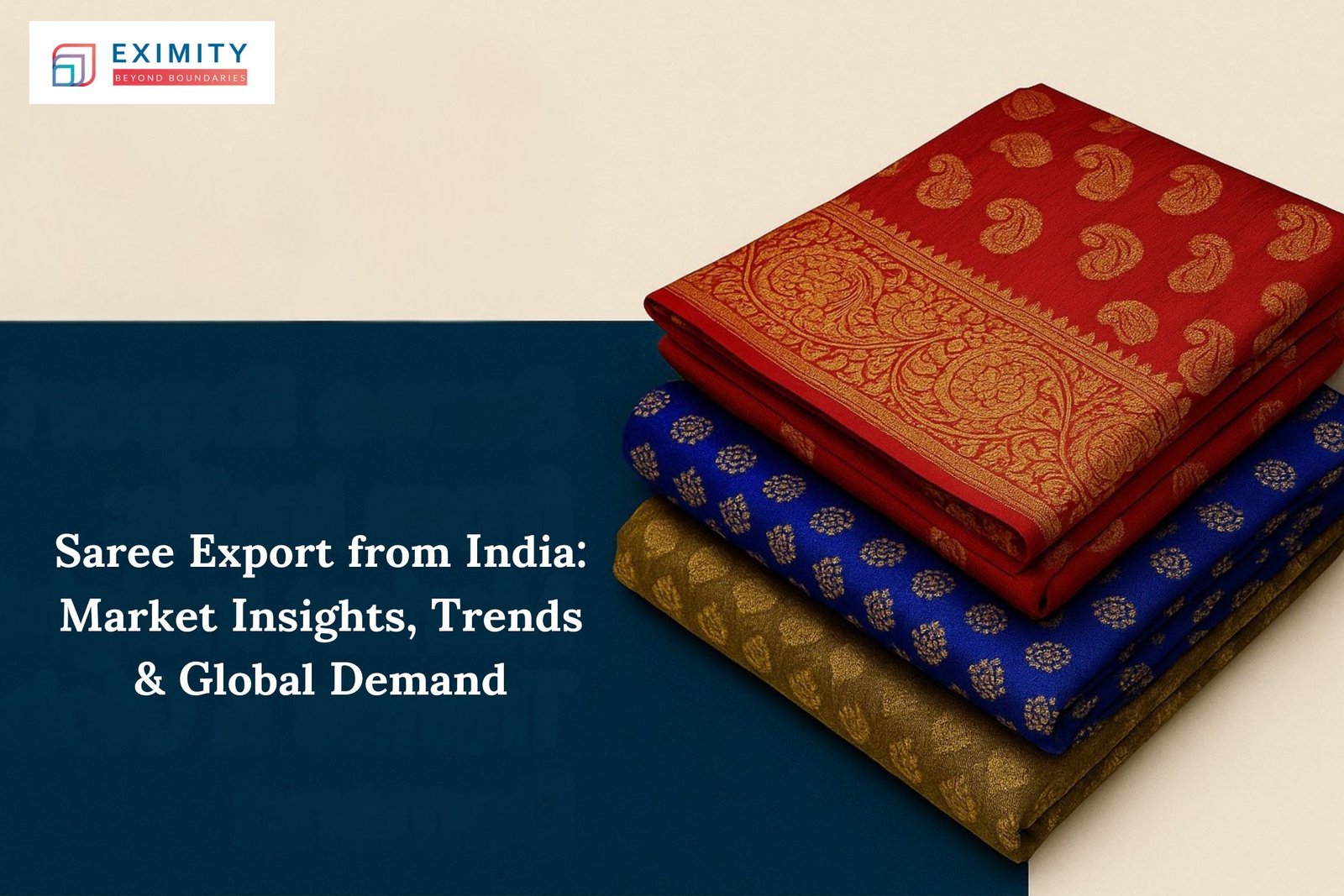
Saree export from India has undoubtedly made a significant impact on the country’s textile export market, as Indian sarees continue to be exported to new international markets every day. From traditional handwoven silk sarees to contemporary designer sarees, Indian sarees are a true mix of culture and craftsmanship. Sarees are one of the most demanded textiles in the international market. As orders continue to pour in from the USA, UAE, UK, Canada, Australia and Southeast Asia, India has continued to remain the largest producer and exporter of sarees. In this blog, we will talk about the saree export from Indian market insights, global trends and the top manufacturing hubs, along with the new exporter opportunities entering this industry.
The Strength of India’s Saree Industry
The saree is more than clothing—it is a symbol of India’s heritage. World-class weavers, advanced power loom technology, and large manufacturing hubs across Gujarat, Tamil Nadu, Uttar Pradesh, and West Bengal power the industry. These regions are well known for hosting some of the biggest clusters of saree manufacturers in India, who supply bulk quantities to both domestic and international buyers.
India is also home to the biggest saree manufacturer in India, in clusters such as Surat and Varanasi, where lakhs of weavers and production units contribute to the booming export market. With a combination of handloom mastery and large-scale mechanized production, India caters to the premium as well as affordable segments of global buyers.
Growing Global Demand & Export Insights
The world’s appreciation of Indian ethnic wear is propelling the export of sarees and other traditional Indian attire to new heights. Indian and Fusion Sarees are being sought after in the diaspora, worn by influencers and attendees au courant in festive, wedding, and cultural gatherings of all sorts.
The past few years have seen the export of sarees and other traditional attire (especially silk and cotton sarees, designer and embroidered variants, and synthetic) reach unprecedented levels. Exporters have broadened their visibility in the world market by venturing into international B2B portals. A deeper understanding of the Insight into Indian textiles, Silk Export from India, will help the reader appreciate the role silk products play within the export basket.
Why Global Markets Prefer Indian Sarees
International customers have confidence in Indian sarees because of:
- Weaving Traditions & Handloom Techniques: Rich Indian history of weaving sarees.
- Competitive Prices: Lower saree prices in India than in other countries.
- Variety: Indian sarees can be found in different styles, fabrics, and designs.
- Skilled Exporters: The strong presence of skilled saree exporters in India
Countries with the highest Consistent Demand Global Markets Prefer Indian Sarees:
- USA
- United Arab Emirates (UAE) and Saudi Arabia
- United Kingdom (UK) and Germany
- Canada
- Singapore and Malaysia
- Sri Lanka
- Australia and New Zealand
These Markets Depend largely on it. Indian suppliers play a significant role in the wholesale and custom saree design lines.
Types of Saree Export from India
1. Silk Sarees
The most dominant and prestigious segment of exports is silk sarees. The various types of silk sarees include Banarasi, Kanchipuram, Mysore Silk, Sambalpuri, and Paithani. Indian Silk sarees are also the overwhelming leaders in the luxury and wedding apparel segment of many countries in the world. Please see our sister’s page, Silk Export From India, to find out more about the Indian silk industry.
2. Cotton Sarees
Compared to a silk saree, cotton sarees are much lighter and more breathable. They are also more affordable. They are also lighter and more breathable. They are in high demand for export to countries with warmer climates. The most popular cotton sarees include Jamdani and Chanderi. There is also a lighter version called Kota Doria, the popular version of Khadi and a handblock for Printed Cotton. The booming Cotton industry in India is also linked to this. You can read more on this industry using Cotton Exports From India.
3. Designer Sarees
Many buyers go for modern embroidered sarees, georgette sarees, net sarees, and ready-to-wear sarees.
4. Synthetic and Printed Sarees
Surat was recognized for its synthetic sarees, printing technologies, and bulk production capabilities. Due to the low cost and lively patterns, these are among the most exported sarees.
Top Manufacturing Hubs in India
Saree manufacturing clusters in India are globally recognized for their scale, skill, and quality.
Surat (Gujarat)
- Surat is the world’s leading manufacturing hub for synthetic sarees.
- Surat is recognized as one of the largest clusters of saree manufacturers in India.
- Surat specializes in printed, georgette, chiffon, and designer saris.
Varanasi (Uttar Pradesh)
- Famous for the Banarasi Silk sarees.
- Varanasi has a high demand for its quality sarees in premium international markets.
Kanchipuram (Tamil Nadu)
- Kanchipuram (Tamil Nadu) is renowned as the silk capital of South India.
- Kanchipuram is renowned for its heavy zari work and luxury silk collections.
West Bengal
- Jamdani, Tant, Baluchari, and handloom cotton sarees.
- There is a high demand in international markets for the handcrafted materials.
Mysore & Karnataka
- Mysore is renowned for its pure silk sarees.
These manufacturing regions contribute significantly to saree export from India, supplying high-quality collections to global retailers and distributors.
Role of Indian Saree Exporters in the Global Supply Chain
Saree exporters in India bridge the gap between the sellers and the manufacturers. Their jobs include:
- Finding people and places that sell premium fabrics
- Designing the fabric and ensuring bulk production
- Quality Control
- Documenting and shipping the parcel
- Exporting and meeting all the needed compliances
- Offering logistics support globally
Private label saree exporting allows exporters to sell sarees to companies that want to sell them under their own brand names.
Export Process & Documentation
To start saree exports, exporters need:
To begin selling sarees to different countries, you must obtain:
- An Import Export Code (IEC)
- A Goods and Services Tax (GST) Registration
- An Authorised Dealer (AD) Code from your bank
- A Digital Signature for documentation
Export Documentation that is needed includes:
- A Packing List
- A Commercial Invoice
- A Shipping Bill/Airway Bill
- Certificate of Origin
- A Fumigation Certificate (if required)
Shipping is done by:
- Air shipment for retail orders that need to be delivered as soon as possible
- Sea cargo for larger orders
This assures that the export store is running properly.
Current Trends in the Saree Export Industry
1. The Global Wedding Market: There is a presence of multicultural weddings, which creates a demand for premium silk and designer sarees globally.
2. The Rise of Ready-to-Wear Sarees: There has been a rise in the popularity of easy-to-wear sarees.
3. The Growth of Online B2B Exporting: The saree export industry has greatly benefited from the introduction of B2B retail sites like Amazon and Etsy.
4. Sustainable & Organic Fabrics: Customers who want to care for the environment choose natural dyes, organic cotton, and handloom sarees.
Challenges in the Saree Export Market
- Price competition among exporters
- Trouble keeping consistent handloom quality
- Increasing costs for raw materials (silk, cotton, zari threads)
- Delays in logistics or expensive shipping
Even with these challenges, the export potential continues to rise because of the growing cultural influence around the world and the increasing demand from the Indian diaspora.
How New Exporters Can Succeed
To start a successful saree export from India, new exporters can:
- Define a lucrative category of sarees to focus on (e.g., silk, printed designer, cotton)
- Work with trusted saree manufacturers in India
- Focus on specific countries in the world suffering from saree scarcity and target overseas buyers.
- Develop comprehensive digital catalogs.
- Attend global textile and fashion industry events
- Develop silo business relationships with overseas clients.
For further understanding of the clothing export business, get in touch with the Export of Clothes, which supports the export of fashion-related services.
Future Outlook for Saree Exports
The future of saree exports looks extremely promising due to:
- Growing international appreciation for Indian ethnic wear
- Increased spending power of the Indian diaspora
- Strong digital presence of Indian exporters
- Expansion of luxury silk and designer saree demand
India is set to remain a global leader in saree production, supported by skilled artisans, advanced manufacturing units, and some of the biggest saree manufacturers in India hubs that cater to worldwide orders.
Conclusion
India’s thriving saree manufacturing clusters, silk staples, designer sarees, and a myriad of exports are pivotal to the saree export from India. The growth potential of this sector is immense, due to the contribution of world-class production hubs, skilled artisans, and competitive saree exporters in India. There is expansive potential for closing the global gap and meeting the demands of every continent with authentic Indian textiles. There is a rising global demand for authentic Indian textiles as consumer preferences shift and exporters are presented with immense potential.