
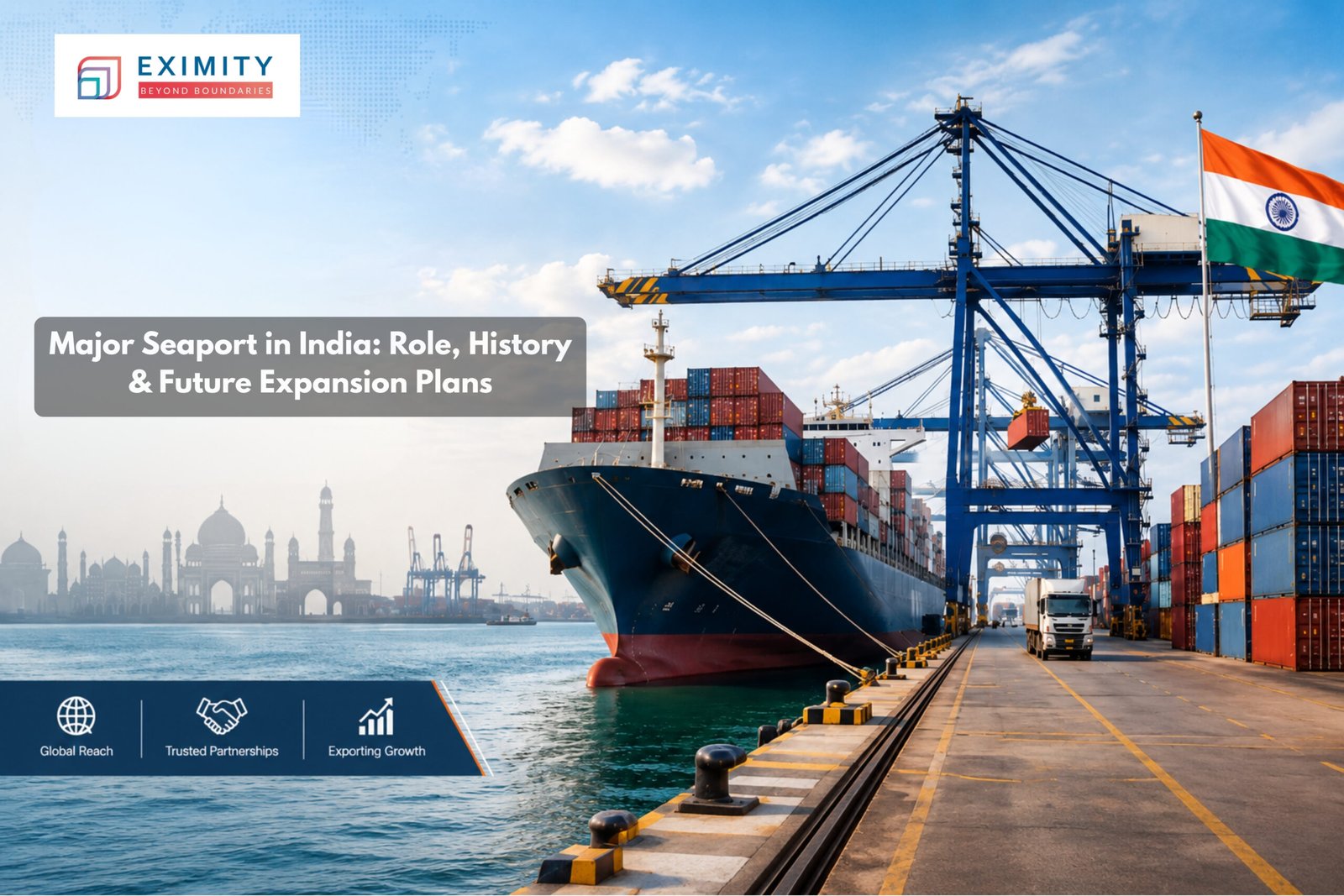
With one of the largest coastlines at over 7,500 kilometers, India claims one of the most important locations for trade by sea. All major seaport in India are vital for connecting the country to global markets as they deal with millions of tons of cargo every year. From ancient routs of commerce to today’s container ports, India’s ports have witnessed a lot of changes. With the current trends, the prospects are very bright.
The Historical Roots of Indian Seaports
India has a long history of international maritime trading evidenced in ancient scriptures and excavations. Archaeological excavations show ports of the west and east coasts of India. Combined with research, the evidence confirms trade with the Mesopotamia, Rome, China, and Southeast Asia.
For people in trade and logistics, knowledge of the how many seaports in India is of vital concern. India has 13 major ports in India that are administered by the central government, and many minor ports that are administered by the state governments.
The 13 Major Ports in India
The Major Port Authorities Act of 2021 governs the 13 major ports in India, spread across the eastern and western coasts of the country:
West Coast Ports:
- Deendayal Port (Kandla), Gujarat
- Mumbai Port, Maharashtra
- Jawaharlal Nehru Port (JNPT), Maharashtra
- Mormugao Port, Goa
- New Mangalore Port, Karnataka
- Cochin Port, Kerala
East Coast Ports:
- Chennai Port, Tamil Nadu
- Kamarajar Port (Ennore), Tamil Nadu
- V. O. Chidambaranar Port (Tuticorin), Tamil Nadu
- Visakhapatnam Port, Andhra Pradesh
- Paradip Port, Odisha
- Kolkata Port, West Bengal
- Syama Prasad Mookerjee Port (Haldia), West Bengal
If you’re looking for a major seaports in India map, the Major Port Authorities of India and the Ministry of Ports, Shipping & Waterways have recently published maps indicating the precise locations and the connected Cargo Zoning.
Role of Each Major Seaport in India’s Economy
Each major seaport in India plays a vital role in international trade within its region. More than 95 percent of India’s trade, by volume, and nearly 70 percent of trade, by value, is conducted through the country’s seaports. India’s major seaports handle a variety of cargo, including crude oil, containers, coal, fertilizers, food grains, and finished products.
Key economic roles include:
- To facilitate exports and ensure that Indian goods reach the global marketplace.
- To secure the country’s imports by providing a gateway through which essential goods (like electronics and crude oil) can enter the country.
- To create direct, and indirect, millions of jobs.
- To enhance the economy and GDP of the country.
For more information about how the ports of India shape trade, read our post on Indian Ports and their role in Global Trade Extension.
Biggest Seaport in India
Jawaharlal Nehru Port in Mumbai is biggest seaport in India by container traffic. As India’s biggest seaport by container traffic, JNPT processes over half of the nation’s containerized goods. JNPT is among the most developed ports in Asia.
The biggest seaport in India total cargo volume is Deendayal Port (Kandla) in Gujarat. In combination, JNPT and Deendayal Port (Kandla) define India’s biggest seaport by scale, capacity, and impact on trade.
How India Compares: 7 Biggest Seaport in the World
To understand how India ranks globally, we can evaluate the 7 Biggest Seaport in the World:
- Port of Shanghai, China
- Port of Singapore
- Port of Ningbo-Zhoushan, China
- Port of Shenzhen, China
- Port of Guangzhou, China
- Port of Busan, South Korea
- Port of Jebel Ali, UAE
Though Indian ports are not currently among the biggest in the world based on container traffic, JNPT is climbing the ranks, and India’s port modernization mission is expected to dramatically reduce the gap by 2030. Every single major seaport in India is undergoing modernization to allow the country to be competitive on the global scale.
Seaports and Regional Trade Connectivity
As integral parts to the global logistics network, trade routes featuring multiple seaports can be considered as trade corridors. Thus, a better understanding of how many seaports in India actively integrate with regional trade corridors will shed more light on the strength of India’s logistics.
The Ports in West Bengal tie Bangladesh and Northeast India to the global shipping systems. Read more to discover just how important these ports are to regional trade.
The remaining ports of the western coast link India to the Middle East, Europe, and Africa. The eastern coast ports link India to trade with Southeast Asia, East Asia and Australia. Each major seaport in India fulfills a specific geographic and trade role, and together they are strategically important.
Future Expansion Plans for Indian Seaports
The Indian government, under the Maritime India Vision 2030 and Sagarmala Programme, aims to transform every major seaport in India with:
- Capacity expansion — targeting 10,000 MTPA cargo handling capacity
- Port-led industrialisation — developing port-linked industrial clusters
- Multimodal connectivity — integrating ports with rail, road, and inland waterways
- Privatisation and PPP — attracting private investment for modernisation
- Green ports initiative — developing eco-friendly, sustainable port operations
- Mega port projects — Vadhavan Port in Maharashtra is set to become one of India’s largest deepwater ports
One of the best examples of the infrastructure India has invested in, and will continue to invest in, is Visakhapatnam Port.. Explore more about the Port in Visakhapatnam and its growing significance in global commerce.
These initiatives aim to lower turnaround times, lower logistical costs, and position India as a major player in international marine trade. Each year sees the introduction of new ports, deeper berths, and smarter terminals that redraw the major seaports in India map.
Frequently Asked Questions (FAQs)
How many seaports in India are considered major ports?
The Major Port Authorities Act of 2021 classifies and administers 13 major ports in India that the central government oversees. Major ports are located on both the east and west coasts of India.
Are there any maps outlining the major seaports on the Indian subcontinent?
You can find a major seaports in India map on the Ministry of Ports, Shipping & Waterways’ official website (ports.gov.in). It provides all 13 major seaports in India map along with their locations, routes, and cargo handling areas on both coasts.
How do Indian seaports compare to the 7 biggest seaport in the world?
India’s ports are growing rapidly but are not yet among the 7 biggest seaport in the world by container volume, which are dominated by Chinese ports like Shanghai and Ningbo. However, with Maritime India Vision 2030 investments, JNPT and upcoming ports like Vadhavan aim to close this gap significantly.
Conclusion
Over the years, the trade ports of India have evolved from serving as small hubs to large modern facilities that can handle millions of tons of cargo. With its significant facilities located on all coastal edges and the ongoing plans for expansion, India is on its way to being a leader of the global trade. If you are a trader, involved in the logistics industry, or a researcher of trade policies, understanding every major seaport in India will help you trade internationally.