
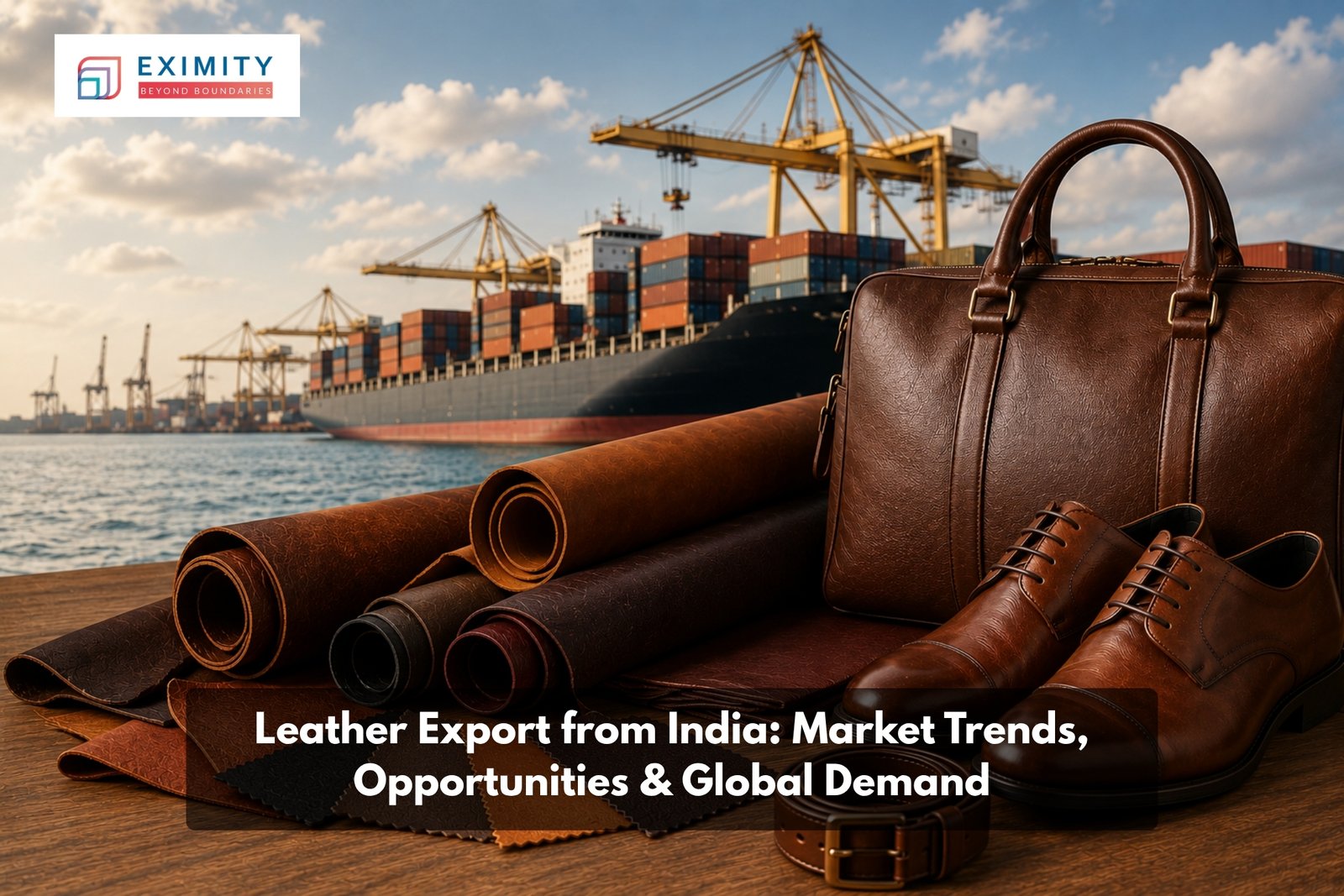
India has a long history in the global leather market, and leather export from India continue to be an important part of the country’s internal economy. The leather industry in India supplies Europe, North America, and Asia with everything from premium finished leather to hand-made products to commercial shoes. India has a great abundance of raw materials, skilled tradesmen, and competitive pricing. Because of this, India has become an optimal sourcing location for global leather consumers. The main product groups, the strongest export prospects, the market trends, and the export potential of Indian leather are all described in this article.
Overview of the Leather Industry in India
The leather industry in India is one of the oldest and most organized manufacturing sectors in the country. India ranks second in the world for the production of shoes and is responsible for about 13% of the world’s leather production. The Indian leather market is one of the most important markets for the country’s economy, as it provides a livelihood to over four million people. The market also contributes a great deal to the country’s rural economy. Most production takes place in Tamil Nadu, West Bengal, Uttar Pradesh, Punjab, and Maharashtra.
Due to its great quality, durability, and variety in designs, leather from India is in high demand Indian products in many global markets. It is also valued for its design flexibility, and India exports an abundance of raw, semi-finished, and fully finished leather.
Key Leather Products Export from India
The export of leather-based products from India has a wide variety of options that suit different international markets. Some of these options are:
1. Leather Footwear
When it comes to leather exports, footwear is the most important segment. Indian companies manufacture a variety of footwear, including formal shoes, boots, sandals, and safety footwear, and supply them to many large international companies. Due to the competitive pricing of export shoes from India, many companies from Europe and the US show interest in importing them. Footwear categories that are mostly exported from India include:
- Formal and informal leather shoes
- Boots and footwear of an outdoor and industrial nature
- Safety footwear
- Footwear for women, girls, and children
2. Leather Goods & Accessories
Leather products export from India also consist of a wide range of leather accessories. Leather products include handbags, wallets, belts, and travel bags. High-quality leather accessories are exported to Europe and the Middle East by artisans in Kolkata, Kanpur, and Agra. The following are the most often exported goods from India:
- Leather bags and purses
- Wallets and cases
- Belts, straps, and travel bags
- Leather gloves and jackets
3. Finished Leather (Raw & Semi-Processed)
A number of international companies import finished and semi-processed leather from India so that they can utilize it to manufacture finished goods. Export of bovine, buffalo, and goat leather specifically contributes to a large percentage of the overall leather export from India.
Global Demand and Key Export Markets
Leather export in India is driven by strong demand from several key geographies. It is important to recognize those countries to discover import export business ideas in the leather industry:
- USA and Canada – There is a strong demand for finished leather products, shoes, and accessories.
- Germany, UK and Italy – Demand for high-quality leather products and apparel.
- UAE and Gulf Countries – The market for high-quality leather products and shoes is quickly developing.
- Hong Kong and China – Demand for both finished and semi-finished leather products is large.
- Australia and New Zealand – Demand for leather shoes and goods is consistent.
The Council for Leather Exports (CLE) of India provides numerous services for Indian leather exporters in the form of buyer-seller meetings, trade fairs (such as IILF), and programs aimed at developing new markets.
How to Export Leather Goods from India
If you are exploring how to export leather goods from India, here is a step-by-step overview of the process:
- Get an IEC (Importer Exporter Code) from DGFT. This is a requirement to export from India.
- Get registered with the Council for Leather Exports (CLE). Without being a registered member, you won’t have the ability to access export subsidies, benefits, and global trade fairs.
- Complete your GST registration. This allows you to claim GST refunds and input them to export.
- Get the HS Code to classify your goods. Leather goods fall into HS Code 41 (raw hides/leather) and 42 (leather goods/footwear).
- Use the best Incoterms. Leather goods tend to use both FOB and CIF.
- Prepare paperwork. Commercial invoice, packing list, bill of lading, origin certificate, quality certificates and anything else regarding export paperwork.
- Apply for export incentives. Use RoDTEP, a duty drawback, and the EPCG scheme to gain a competitive advantage. For more information on IEC, GST refunds, duty drawback and the rest, visit Eximity.
Market Trends Shaping Leather Export from India
Modern globalization leads to certain trends affecting trade. Here are trends affecting leather export from India.
Sustainability & Eco-Friendly Leather
In Europe, buyers want sustainable leather and leather tanned with natural instead of artificial tanneries. Green manufacturing gets Indian leather exporters long-term contracts.
Technology Upgradation
The tanning systems from India that utilize Government sponsored schemes in the ASIDE and EPCG are positioned to enter international markets. Systems that utilize automation for stitching, cutting and finishing for Indian leather exporters will comply with international standards and will greatly expand the growing Indian leather market.
FTAs and Trade Agreements
India’s currently being in free trade agreements with the EU, UK, and GCC is likely to increase India’s leather exports from India market as the import duties will decrease in the target markets.
Opportunities for New Exporters
The leather segment offers rich leather export opportunities in India for entrepreneurs and MSMEs. Here is why this sector is worth exploring:
- Low entry barriers
- Strong governmental support
- A global buyer base
- Strong demand from top importers
- Rapid e-commerce
- Competitive advantage
Conclusion
Leather export from India offers a compelling combination of tradition, craftsmanship, and commercial potential. Whether an existing leather goods manufacturer or a new exporter exploring how to export leather goods from India, the depth and appeal of this sector with its global opportunities make it a wise choice. While Indian manufacturers’ operations and systems are modern and in sync with global sustainability practices, the potential for leather products export from India is bright.