
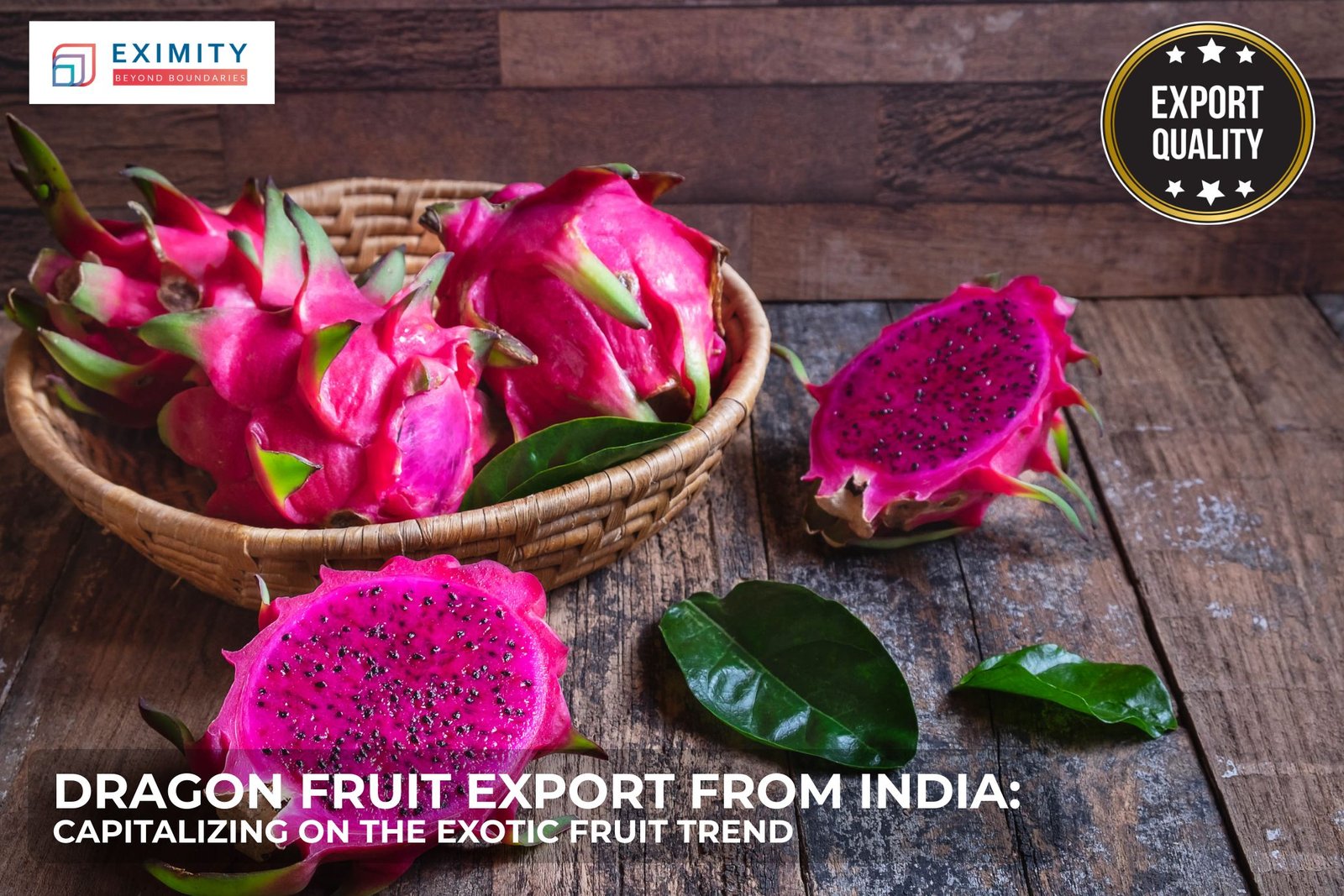
India’s agriculture continues to diversify, with new opportunities presenting themselves with the export of dragon fruit. No longer an exotic fruit, dragon fruit export opportunities to the Middle East, Europe, and Southeast Asia. With the right benefits, exporters can help India become one of the top exporters of this super fruit.
Overview of Dragon Fruits in India
The cultivation of dragon fruits in India started in the last decade in arid and semi-arid regions. Farmers from the states of Gujarat, Maharashtra, Karnataka, Andhra Pradesh, and Tamil Nadu have taken on the crop due to its resilience to drought, low water usage, and the lucrative international market for the fruit.
As the world moves to healthier eating, Indian dragon fruit has gained recognition for its quality, vibrant color, and sweetness. The fruit’s popularity, relative to the willingness of Indian farmers to explore new export crops and the changing dietary patterns of the Indian population, has increased. The government training and support in the cultivation of exotic fruit, accompanied by subsidies, have greatly contributed to this.
Dragon Fruit Season in India and Production Insights
The dragon fruit season in India runs from June to November. In some southern states, dragon fruit growing conditions are so ideal that production can be carried out nearly all year. The ability to harvest fruits in all seasons provides Indian exporters with a significant competitive edge. Indian exporters can provide a continuous supply to global markets.
The quality and quantity of dragon fruit production in India have increased with the introduction of modern farming practices. New exporters have entered the market, and dragon fruit exports have increased due to the ability to provide off-season fruits. The production of off-season dragon fruit provides a large advantage to exporters who want to fill the growing global market.
Varieties of Indian Dragon Fruit: White and Red Flesh Types
The Indian market mainly grows two varieties: white and red. The white dragon fruit has a mild sweetness and a crunchy texture, so it is best to eat it fresh or in fruit salads. Red-fleshed dragon fruits contain a large amount of antioxidants and are exported to red flesh. Dragon fruits are particularly popular in the premium international market.
dragon fruits in India, both types, stand up to global quality benchmarks.The business of exporting dragon fruit from India is doing well, although it does have some problems. Some of the main problems are that small-scale farmers don’t know much about it, that storage and packaging need to be better, and that there is fierce competition from countries who have been exporting for a long time.
To understand India’s wider fruit export landscape, explore how traditional exports like mangoes contribute to global trade. Learn more in Indian Variety of Mangoes — Discover the Best Mangoes Grown Across India, which highlights India’s top mango-producing regions and their international demand. This offers a broader view of India’s growing fruit export potential.
To understand India’s wider fruit export landscape, explore how traditional exports like mangoes and other fruits contribute to global trade. Learn more in The Growth of Fruit Export from India, which highlights India’s evolving fruit export market and its international potential.
Dragon Fruit Export from India: Current Status & Destinations
The dragon fruit exporter in India business is successful, but it is not without obstacles. Low awareness amongst small-scale farmers, the need for improved storage and packaging, and stiff competition from long-established exporting countries are some primary challenges.
Quality control must be done carefully, as fruit is perishable and some are temperature sensitive. Exporters must also deal with local and international legal regulations, including phytosanitary certifications and global food safety regulations.
Challenges in Dragon Fruit Export Business
Despite the success, the dragon fruit export business has its limitations. These include little knowledge of the potential within the business for small farmers, insufficient and outdated storage facilities and packaging, and finally competition from countries with export markets that are well established.
Lastly, ensure that the quality is controlled properly, as the fruit is perishable and sensitive to temperature changes.Exporters also have to follow rules and regulations, such as getting phytosanitary certificates and following international food safety standards.
But with the correct logistics, smart partnerships, and government support for exports, Indian dragon fruit may become a steady agricultural export.
Dragon Fruit Cost and Market Demand
As dragon fruit becomes more popular around the world, Indian growers can take advantage of new export prospects. But as more people want dragon fruit, exporters need to figure out dragon fruit cost to be competitive. The price of plants depends on where they are grown, when they are cultivated, and how good the result is.
Exporters need to have a clear understanding of dragon fruit cost so they can set competitive rates and tap into markets where the fruit holds significant value. By grasping the dragon fruit cost, exporters can enhance their trading strategies, minimize risks, and ensure they maintain a strong presence in the global fruit export scene.
For more insights on India’s fruit trade and emerging global markets, explore Export Fruits from India and learn how different fruit varieties are driving export growth.
Opportunities and Future of Dragon Fruit Export in India
Opportunities in dragon fruit export are abundant. There is increasing global demand for exotic, nutrient-dense fruits, which is a positive sign for Indian farmers and exporters. Since dragon fruit is a vitamin C-rich fruit with a high fiber and antioxidant content, it is a go-to fruit for health-conscious individuals.
India’s expanding agricultural infrastructure and positive climatic conditions allow for high export potential and a year-round supply. Furthermore, the trend towards organic, sustainable farming is a bonus for exporters as it allows access to premium markets.
Subsidies provided by the Government under the MIDH and training on high-density farming are helping strengthen the industry, and as a result, India is on its way to becoming a primary center for dragon fruit exporter in India.
Some big odds are:
- that the globe will want more processed and organic dragon fruit goods.
- Availability of export subsidies and trade support schemes.
- Growing awareness about dragon fruits in India among global consumers.
Quick Tips for New Dragon Fruit Exporters
If you are starting out in the dragon fruit export, consider the following:
- Export-grade varieties, particularly the dragon fruit white and red.
- Attention to detail and proper cold storage.
- Made ensuring that export certifications were of high quality and that trade certifications were followed.
- Construct buyer relationships via trade fairs and export promotion councils.
FAQs on Dragon Fruit Export
Q.1. What is the best season for dragon fruit export from India?
The dragon fruit season in India is primarily from June to November; however, the southern states can produce it almost year-round.
Q.2. Which variety is most in demand internationally?
The red-fleshed and the dragon fruit white and red varieties are most popular due to their sweetness.
Q.3. Which states produce the best quality dragon fruits in India?
Gujarat, Maharashtra, and Karnataka are known for producing the best Indian dragon fruit for export.
Q.4. What are the main challenges in dragon fruit export?
Packaging, storage, and competition with Asian exporters are the main challenges Indian traders face.