
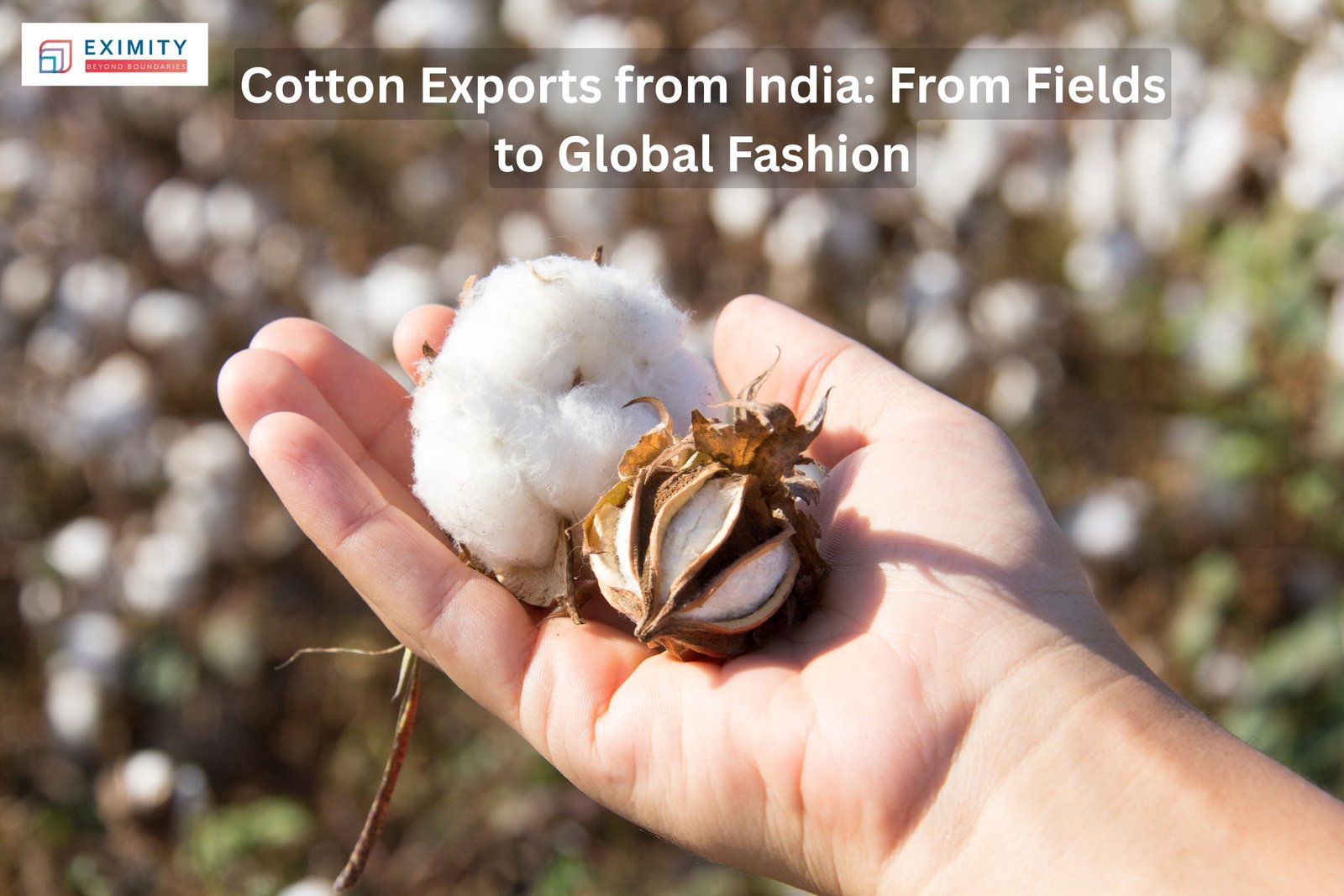
For many years now, India has been one of the top players in the international cotton market, and it significantly supplies textiles to various countries. Cotton exports from India are projected to increase every year due to growing agricultural productivity, an existing ginning industry, and increasing international competition for natural fibers. In this blog, we will look deeper into the cotton industry in India, covering production volumes, export destinations, and potential growth opportunities.
Overview of the Cotton Industry in India
India is the number one cotton producer in the world, and the cotton economy provides sustenance for well over 6 million farmers in the country. The cotton industry in India includes farming, ginning, spinning, and exporting, which generates immense employment opportunities along with trade value.
Key Features:
- Leading states producing cotton: Gujarat, Maharashtra, Andhra Pradesh, Telangana, and Tamil Nadu
- India contributes to 23–25% of global cotton production in India.
- Key varieties: short-staple, medium-staple, and long-staple cotton
Semi-arid regions are ideal for cotton cultivation, and the new BT varieties together with drip irrigation have made these crops more resilient.
Cotton Production in India: A Strong Backbone
The improvement of seed quality, technology adoption, and favorable climate have all contributed to the increase in cotton production in India. In the year 2023-24, India produced well over 35 million bales of cotton, which was enough for both domestic and international markets.
Contributing Factors:
- Government MSP (Minimum Support Price) schemes
- Research institutes like CICR (Central Institute for Cotton Research)
- Digital agriculture practices
Strength in production bolsters India’s position as a supplier of export cotton from India, ensuring consistent availability to international markets.
India’s Role in Global Cotton Trade
Why Cotton Exports from India Dominate:
- Competitive pricing
- Organic and sustainable farming practices
- Wide variety of cotton grades
- There is an efficient supply chain that transports cotton from the farm to the port.
India is a major exporter of raw cotton, cotton yarn, and finished garments, earning it the title of textile export powerhouse. Some of the top importers of cotton exports from India are the USA, China, Bangladesh, Vietnam, and Turkey.
Related Read: Top 50 Products Exported from India
Exporting Cotton from India: Key Insights
Understanding the processes of logistics and compliance is vital when export cotton from India.
Export Essentials:
- Obtain an IEC (Import Export Code).
- Partner with licensed cotton ginning and pressing units.
- Comply with APEDA and Cotton Corporation of India standards.
- Arrange quality testing and fumigation.
Cotton exports from India primarily go through Mundra, Nhava Sheva, and Chennai ports. These facilitate trade with Asia, Europe, and the Americas.
Textile Exports and Their Interlink with Cotton
Textile Exports of India story starts and usually ends with cotton. Soft bolls become yarn, then cloth, then the jeans or towels we all use; each step is factory-ready and money-ready.
Types of Cotton-Based Textile Exports:
- Grey and dyed yarn
- Knitted and woven fabrics
- Towels and bed linen
- Denim and fashion wear
India’s textile exports are globally competitive, thanks to abundant raw materials, low labor costs, and skilled artisans.
Major Cotton Exporting Hubs in India
Maharashtra
Exporters in Maharashtra sits on cotton fields so wide you could lose a GPS signal. That swath feeds spinning mills, trading sheds, and export houses that ship samples before breakfast.
Tamil Nadu
Tamil Nadu, located further south, rivals Maharashtra in terms of cotton exports from India. Towering spinning mills and sprawling weaving units pepper the landscape, firing up looms six days a week. Many processed items leave ports labeled “made in Tamil Nadu” even when shoppers never set foot in the region.
Learn more: Tamilnadu Export
Growth Potential for Indian Cotton Exporters
The number of eco-conscious buyers is increasing, and they have a preference for fibers that are grown naturally. Indian farmers and manufacturers are already familiar with sustainability, making meeting this demand less of a challenge and more of an opportunity. A small push on marketing, and Indian cotton exporters could claim an even larger slice of the global pie.
Key Opportunities:
- Shift to Natural Fibers: Fashion insiders are quietly steering away from synthetic cloth and back toward cotton, linen, and wool. This shift is creating opportunities for growers who adhere to traditional methods.
- European & American Demand: Design studios from Paris to Portland are asking for fabrics with a story. Indian cotton’s long history of quality gives them just the story they want.
- Organic Cotton Preference: Shoppers now count organic cotton as a badge of sustainability. Farmers who earn that label see bigger orders rolling in.
- Trade Deals Matter: India’s recent trade pacts with ASEAN, the EU, and Gulf nations slash tariffs and speed up paperwork. Exporters can ship at a lower cost and with less red tape.
How Cotton Exports from India Support Global Fashion
Indian fiber often rides container ships to Milan, New York, and even Lagos. Once it shows up, designers notice a few standout qualities:
- Durability
- Breathability
- Dye-absorption properties
These traits lead sourcing managers to circle India on their maps.
The Role of Cotton Exporters in India
Cotton exporters in India keep the business humming by following tough quality rules. They quote fair prices and still ship on the promised date.
What Makes Them Stand Out:
- Certifications: Many factories carry GOTS, OEKO-TEX, and ISO stamps.
- Global Networks: Long-formed relationships let them spot buyers before others do.
- Modern Equipment: High-tech gins and presses for speedy sorting and bailing.
- Bulk Readiness: A single customer can lock in 1,000 tons and get it on schedule.
Tips for Aspiring Cotton Exporters
If you’re planning to enter the market as a cotton exports from India, here’s how you can begin:
Step-by-Step Guide:
- Get a DGFT License: Permission to trade outside India’s borders begins here.
- Learn Grading: IS, SSP, and mash numbers dictate quality tiers.
- Meet Buyers: Attending expos or using B2B sites puts you face-to-face with merchants.
- Mind Paperwork: Packing lists, phytosanitary docs, and customs bills must match.
- Watch Prices Online: Port portals and price tickers keep you aware of market shifts.
Key Facts: Raw Cotton Exports from India
India still ranks as the world’s top spot for raw cotton exports from India. That lead is thanks to steady supply, loyal growers, and ever-ready sea lanes.
Popular Grades for Export:
- Shankar-6 is the gold standard for many spinners.
- MCU-5 strikes a balance between quality and cost.
- DCH-32 offers extra length but comes at a higher price.
Bangladesh, China, and Vietnam keep coming back for our fiber. They love the long staple length and strength that Indian bales deliver.
Summary of Strategic Advantages
- Largest cotton producer globally
- Well-established infrastructure
- Global buyer trust
- Efficient logistics and port network
We are expanding the base for exporting organic and sustainable cotton.
Final Thoughts
Cotton exports from India heyday didn’t just happen; they’ve been stitched together with care over generations. Farmers dig in, scientists tinker, and traders keep the money moving, so the fiber keeps finding its way to fabric makers around the globe. With that mix of old habits and new tech, Indian cotton is set to slip into wardrobes for a very long time.