
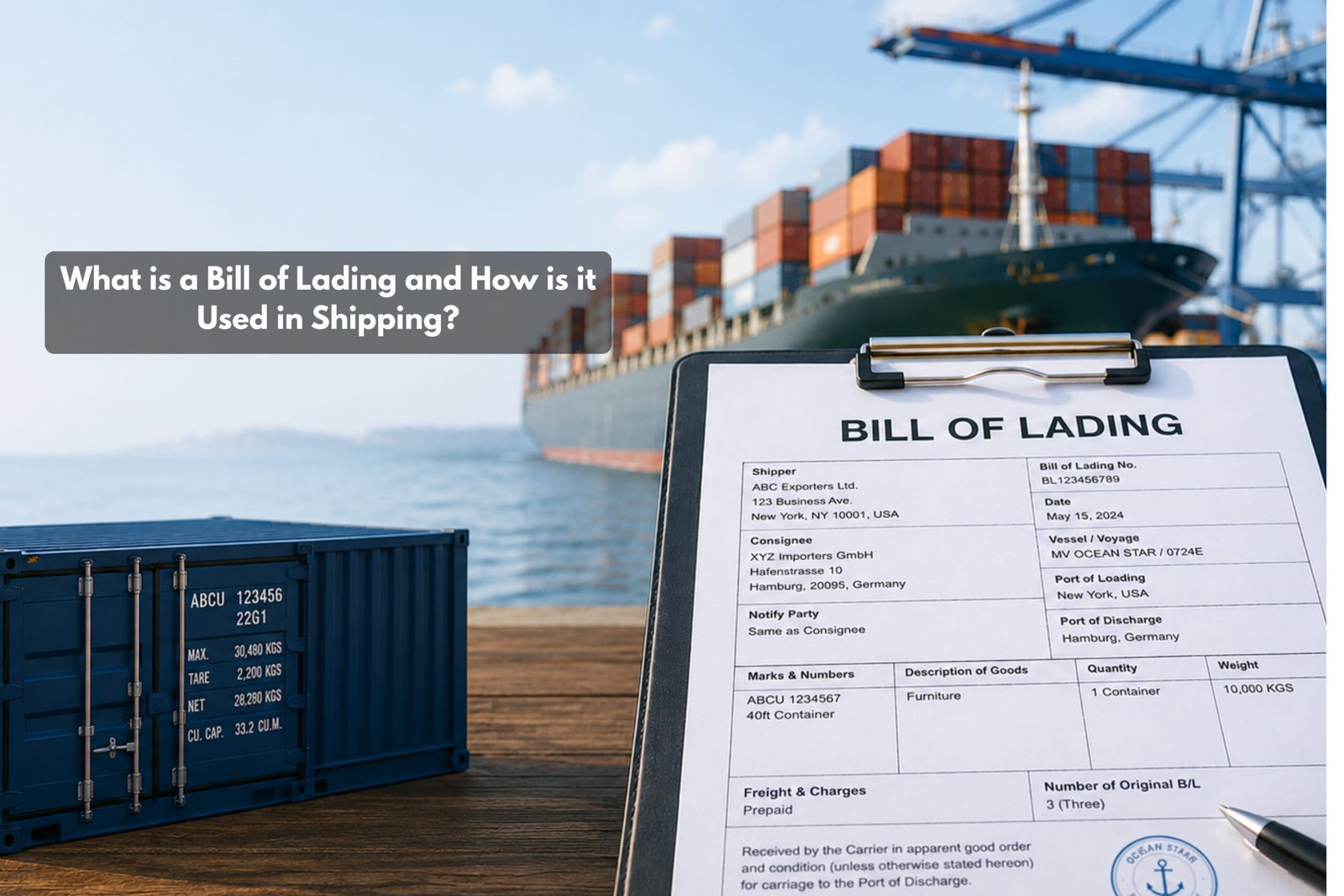
All international shipments are accompanied by a key document, the bill of lading. This is important to the first-time exporter as well as the seasoned trading company. It provides legal protection for your cargo, ownership certification and legal certainty for the entire shipping process.
What is a Bill of Lading?
A bill of lading is a legal contract issued by a shipping company to a person or company that is sending cargo. A bill of lading is classified as a receipt for cargo, a transported goods contract, and proof of ownership of the goods being transported. Bills of lading ensure that shipping companies have received goods to be delivered to a specified destination.
The document includes key details such as
- Name and address for the shipper and consignee
- Description of the goods, their quantity and weight
- Port of loading and port of discharge
- Freight and payment terms
- Date of shipment and name of the vessel
- In the shipping trade, a shipment is not legal without a bill of lading.
Without a bill of lading, a shipment has no legal standing in international trade.
Bill of Lading Meaning in Export
The bill of lading meaning is beyond the definition. It provides proof in export that the goods are in the custody of the company. Banks require it to facilitate payment for the shipment under Letters of Credit. It is also required by Customs for clearance.
In India, exporters receive the bill of lading after their goods are stuffed into the vessel. This document is issued by the shipping line or freight forwarder. Check every detail before the vessel departs. A mistake in the weight, consignee name, or HS code can cause a delay of the entire shipment at the destination.
To understand the full export process from scratch, read How to Export From India.
Who Issue Bill of Lading?
Who issue bill of lading is one of the many questions first-time exporters have. It is officially issued by the shipping line; however, this can be done through the following:
- The freight forwarder, who is the line’s agent
- A Non-Vessel Operating Common Carrier (NVOCC)
- The shipping line itself, in the case of an FCL shipment
The B/L is signed by the line only after the cargo has been received and verified at the shipping port. This is the reason why, in advance of loading, exporters should prepare an accurate packing list and invoice.
When preparing your first export shipment, ensure you have your IEC in place. Read: How to Apply IEC Code Online.
Bill of Lading Types
There are several bill of lading types based on the type of shipment or the type of trade agreement:
- Straight Bill of Lading— a type of bill of lading that is non-negotiable and is delivered to the consignee named.
- Order Bill of Lading— a type of bill of lading that is negotiable, and ownership is transferred through endorsement.
- Seaway Bill — a type of bill of lading that does not require the original at the destination and is used when there is a high level of trust in the trade.
- House Bill of Lading — a bill of lading issued to the shipper by the freight forwarder.
- Master Bill of Lading — a bill of lading issued to the freight forwarder by the carrier.
Using the wrong type of bill of lading can create issues at the destination port, so always confirm with your buyer and bank before you finalize.
What is Bill of Lading in Export — Common Mistakes to Avoid
Understanding what is bill of lading in export also means knowing what goes wrong. These mistakes cost exporters time and money:
- Using the wrong consignee resulting in the cargo being put on hold.
- Using the wrong description of the goods which does not match the packing list.
- Delays in surrendering the original B/L resulting in demurrage.
- Failing to check the notify party, which can impact customs clearance.
- Using a non-negotiable B/L when the buyer’s bank requires a negotiable B/L.
India’s export trade is, and will continue to be, increasing in a variety of different products. Examine West Bengal’s Prime Export products to see how the exact same shipping processes are implemented.
How to Track with Bill of Lading Number
Track with bill of lading number is the fastest way to track your shipment. Each B/L issued contains a number that is unique to each individual shipment.
Steps to track:
- Visit the official site of the shipping line (e.g., Maersk, MSC, CMA CGM, etc.)
- Input your bill of lading number into the tracking section
- Check the status of the vessel, the estimated time of arrival and the status of the port
Most carriers provide real-time tracking updates. You can use third-party sites that enable container tracking with bill of lading for multiple carriers in a single platform.
Container Tracking with Bill of Lading
Container tracking with bill of lading has become a common practice for exporters and importers. Since the B/L number is directly linked to the container number, the movement of the cargo along the logistics chain can be tracked.
Real-time tracking helps you:
- Synchronize warehouse and delivery processes at the destination
- Anticipate delays and notify the buyer in advance
- Eliminate detention and demurrage costs
Eximity and platforms like it aggregate shipping data from B/L documents and cover a wide range of trade routes, enabling users to view real-time shipment data and track shipment patterns of competitors.
Frequently Asked Questions
Q1. If I misplace my bill of lading, can I obtain a duplicate?
Yes. You can request a duplicate from the shipping line or the freight forwarder. For bill of ladings that are negotiable, the original must be surrendered in order to receive the cargo; a copy will not suffice.
Q2. Describe the differences between house bills of lading and master bills of lading.?
A house B/L is given to the shipper from the freight forwarder, while a master B/L comes from the carrier to the freight forwarder. Both are seen in LCL shipments.
Q3. Are bills of lading necessary in all shipments?
It is required for shipments via sea. For air, the equivalent is an Air Waybill (AWB), and for road and rail, it is a consignment note or lorry receipt.
Conclusion
A bill of lading is highly significant in the shipping industry. It is a binding legal document that serves to protect everyone engaged in trade. bill of lading meaning is critical to export operations, as is the knowledge of who issue bill of lading. Use the correct one of the bill of lading types. track with bill of lading number, and always check that every field is accurate before your shipment is sent from the port.