
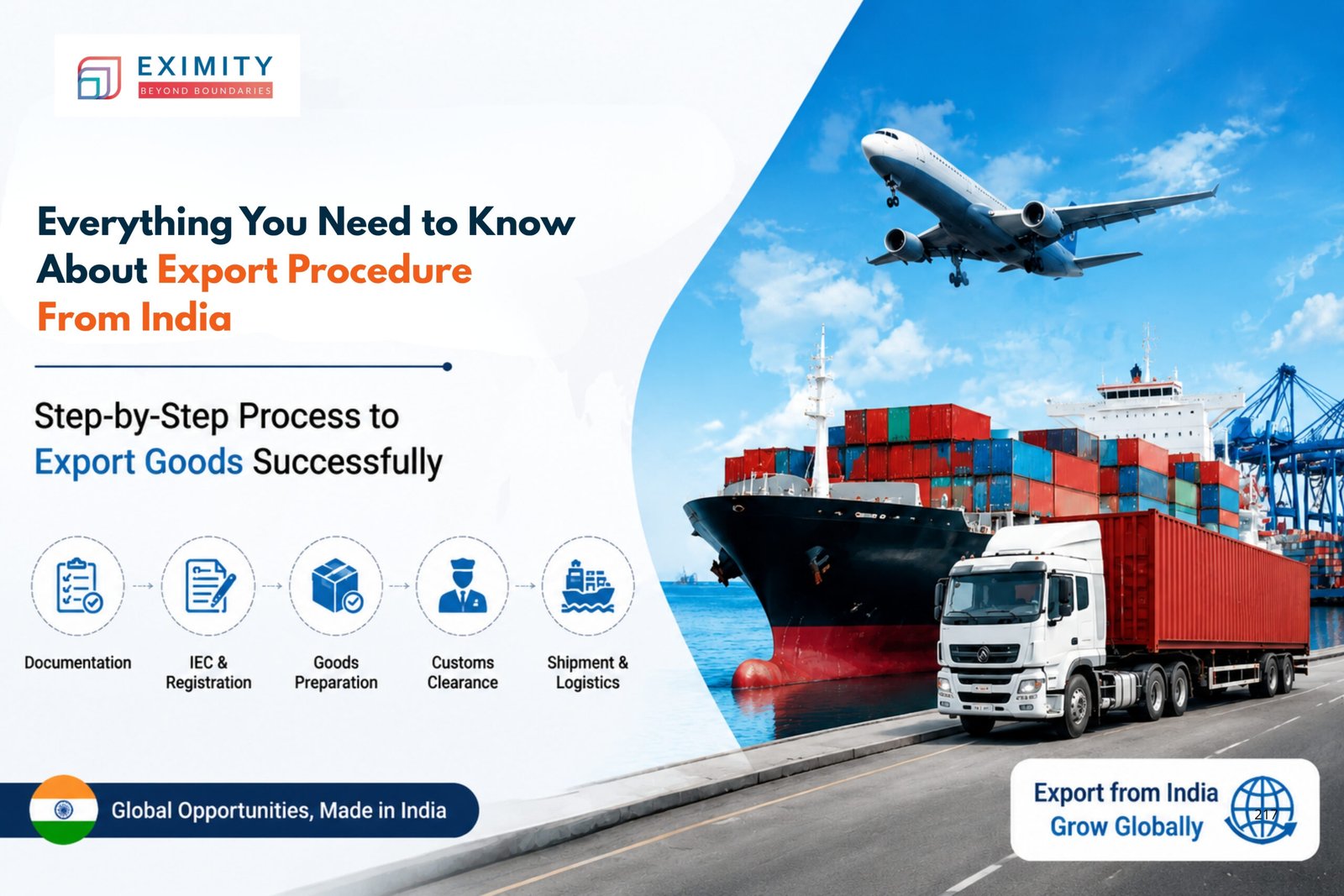
India’s thriving position in International Trade provides businesses an opportunity to expand globally as exporters. Currently, the export procedure from India entails multiple time-consuming steps that are governed by various regulatory authorities. Therefore, an in-depth understanding of the export process becomes necessary.
Below is a summary of all the steps associated with the export procedure of India.
- Mandatory registrations are acquired, such as the IEC Code and GST.
- Drafting the export documents, including the Invoice, Packing List, and the Shipping Bill
- Customs clearance and port procedures are followed.
What Is Export Procedure From India?
The export procedure from India encompasses all the steps a business is required to complete with a view to legally and efficiently export goods from India for sale to a foreign buyer. This process commences with the receipt of an export order and concludes with the payment being collected by the exporter.
The procedures are bound to the Foreign Trade Policy (FTP) of India, the Customs Act, FEMA, and the DGFT. Every exporter, experienced or new, is required to follow these policies and procedures; otherwise, there is a risk of penalties, delays, or shipment being rejected.
For a wider perspective and more in-depth information, read our book on Export From India.
Step-by-Step Export Procedure and Documentation
The export procedure and documentation in India are step-wise procedures. Omitting any step may cause delays in the realization of payment and customs clearance.
Step 1 – Obtain IEC Code and GST Registration
The following are required before engaging in any export activity:
- Import Export Code (IEC): DGFT issues this. It is mandatory for all exporters.
- GST Registration: This is mandatory for the filing of shipping bills and the undertaking of GST refund processes.
- RCMC (Registration-cum-Membership Certificate): This is issued for export benefits.
Step 2 – Receive Export Order and Open Letter of Credit
After the buyer orders, the Purchase Order (PO) or Letter of Credit (LC) is received by the buyer’s bank.
Step 3 – Arrange Goods and Pre-Shipment Inspection
The goods must be packaged according to the buyer’s instructions. For certain goods such as food, pharma, and textiles, a pre-shipment inspection by an authorized agency is required prior to the goods being loaded.
Export Procedure in India – Customs and Shipping Process
The export procedure in India involves filing the Shipping Bill on the ICEGATE portal, which is the Customs electronic gateway. The Shipping Bill contains the details of the exporter, consignee, the description of the goods, the HS code, and the declared value of the goods. To understand the relevance of this step of the trade cycle, you can read our complete guide on Import Export Business from India.
Documents Required for Export Procedure and Documentation
The complete set of documentation involved in the process of export is as follows:
- Commercial Invoice—which states the value of goods
- Packing List—which states the quantity, weight, and packing
- Shipping Bill—which is the customs declaration document
- Bill of Lading / Airway Bill—which is the proof of shipment document issued by the carrier
- Certificate of Origin – which states the country of manufacture of the goods
- Insurance Certificate—which covers the goods in transit
Role of Customs House Agent (CHA)
The exporters generally appoint a licensed Customs House Agent (CHA) who files the Shipping Bill and works with the Port Authorities so that the goods are released without any issues. An experienced CHA is helpful in ensuring the export clearance procedure export in a timely manner.
How to Export Products From India – Post-Shipment Steps
Learning how to export products from India goes beyond merely dealing with the customs department. After shipment is made, post-shipment formalities need to be completed by the exporter, which are as follows:
- Provide the Bill of Lading and other shipping documents to the bank
- Upload the GSTR-1 along with the export invoice
- Make a claim for GST or IGST refund on exports
- Submit the Bank Realization Certificate (BRC) to the bank after receiving payment from the buyer.
For the individuals who are developing a long-term trade business, understanding the full procedure export system is a must, right from the documentation to the customs formalities.
Exploring Export Trends and Global Opportunities
India’s export market is changing every day. With great demand in the global market for products in sectors like pharmaceuticals, engineering goods, chemicals, textiles, and electronics, exporters should analyze the shifts in global trade and the right products and markets to trade in. For a better understanding of how India is engaging in global trade, you should read about Exploring Export Trends and the current market practices in the realm of international trade.
FAQs – Export Procedure From India
Q1. What is the first step in the export procedure from India?
The first thing to do is to apply for the registration of the Import Export Code with the Directorate General of Foreign Trade (DGFT) because, without this code, you cannot perform any export transaction in India.
Q2. Is GST registration mandatory for exporters?
Yes, as a prerequisite to submit the Shipping Bill or claim the IGST that is eligible for a refund due to export, an exporter must register for GST.
Q3. How long does the export procedure in India take?
The export process in India, which includes everything from the buyer placing the order to the shipment reaching its destination, takes anywhere between 7 to 15 working days. This relies on the type of product and the status of the documentation as well as the congestion at the port.
Conclusion
The export procedure from India is comprehensive, well-structured, and designed to provide all the stakeholders with legal assurance that the payment for the goods will be received, and that the goods will be delivered to the overseas buyer. There are various critical components to the export process, such as the registration of the IEC and the documentation, the customs clearance, the GST reclamation, and the delivery of the goods, and each of these processes operates in a well-organized and seamless manner.
The thorough knowledge of the export procedure of india will provide you with a strong competitive position in all international markets, as a first-time exporter or as a trader who is increasing the volume of export activities. It is important to be up-to-date with the processes and to fulfill all the export requirements so that your products penetrate the international markets.