
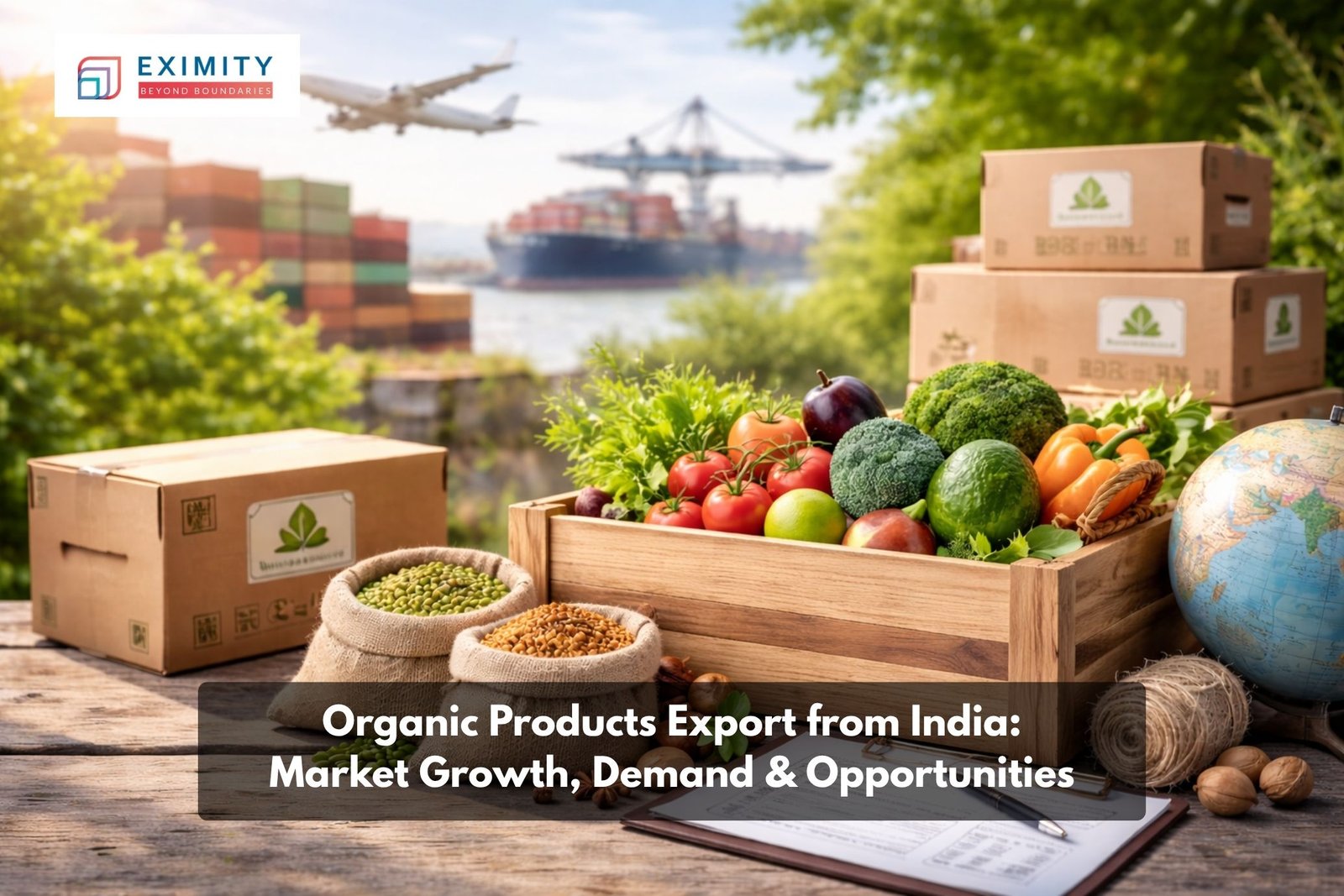
For many years, India has been one of the biggest manufacturers of naturally produced, chemical-free products. Presently, Organic products export from India are one of the rapidly developing sectors in India’s export market. The global rise in health consciousness, coupled with the increased demand for chemical-free goods, offers Indian exporters the opportunity to capture a sizable market in global organic products. Organic products export from India are some of the most varied, as they include food, herbal, chemical, and agricultural products.
The Growing Market for Organic Exports
The last decade has seen the global organic market grow rapidly. Organic products export from India have also been growing steadily, as a result of increased government support and stronger demand from the markets of the US, EU, Japan, and the Middle East. India is one of the top countries in the world with the most certified organic producers.
Key factors fueling this growth include:
- Greater demand for clean-label products and products that are sustainably farmed.
- Increased knowledge of the health advantages associated with organic foods products in India.
- Increased import country compliance with food safety requirements.
- The price competitiveness of Indian organic products versus organic produce from other countries.
- Increased advocacy from the government via APEDA and the National Programme for Organic Production (NPOP).
What India Exports Under the Organic Category
Organic food export from India forms the largest segment, but the basket is much wider than most people realize. Indian products for export in the organic category cover a remarkably diverse range:
- Organic Food and Agriculture: Spices, pulses, cereals, tea, coffee, oilseeds, fruits, and vegetables.
- Organic Chemical Export from India: Natural dyes, organic solvents and bio-based chemical inputs for pharma and manufacturing.
- Processed Organic Foods: Ready-to-eat meals, organic snacks, dairy alternatives and other plant-based products.
- Herbal & Botanical Extracts: Medicinal plant extracts, which have been gaining popularity in the global wellness market.
India is also witnessing increasing worldwide demand for Ayurvedic Products Export from India, as international buyers are looking to buy traditional herbal formulations.
This wide variety of organic products export from India makes it very attractive for a variety of customers, from retail chains to pharmaceutical companies.
Key Demand Drivers in Global Markets
For exporters attempting to trade organic food products in India to other countries, analyzing the solid buyer behavior model is crucial. Year after year, taking into consideration the following four factors, the scope of organic food export from India to other countries has increased significantly.
- Wellness Trends: After the pandemic, people are becoming more health conscious, especially in India. They are looking to buy foods that will boost their immunity in a natural way, as opposed to using supplements.
- Sustainable Development: Apart from India, international companies are sourcing from organic suppliers to fulfill their ESG requirements.
- Policies in the Countries of Import: Countries from the European Union and North America are recently granting access to imported organic certified goods, which is a shift from the previous days.
- Increased Access to Online Shopping: For small and medium Indian exporters, the rise in direct-to-consumer (DTC) channels in organic food products is opening up new avenues.
Opportunities for Indian Exporters
Currently, we are facing one of the best opportunities for organic export from India, as the number of potential avenues is extensive:
- Organic products from India are Untapped in Southeast Asia as well as the Gulf and Eastern Europe, which have been identified as the emerging markets for organics in India.
- Organic products from India that have been identified as Niche such as ashwagandha, moringa, turmeric, and black rice, are commanding a premium in many of the high-growth markets.
- In-house organic brands from overseas retailers are driving demand for Private Label Contracts, as Indian suppliers are increasingly sought after.
- Trade platforms such as Eximity are facilitating direct B2B transactions allowing for organic exporters from India to control their margins by eliminating the middleman.
Indian products for export labeled as organic have been recently added to various digital trade platforms, which have improved the verification and discovery process for international buyers. The organic chemical export from India has also opened new opportunities for trade due to its industrial and pharmaceutical use.
Challenges to Address
While there are many opportunities, there are key challenges that exporters need to be aware of:
- Meeting organic certification requirements for NPOP, NOP (USDA) and EU Organic Regulation
- Maintaining the cold chain for perishable organic produce
- Document management, phytosanitary, and country-specific labeling
- Price uncertainty due to the monsoon and seasonal crop cycle
Sustainable farming solutions such as Vermicompost Export from India are also widely accepted, as the import country demands bio-based farming rather than synthetic alternatives.
Building the Right Export Strategy
A successful export strategy for international organic trade requires export strategies for global business growth. This implies that compliance, market research, and organized digital outreach are necessary for organic products export from India.
- Get certification first: The first APEDA certification is foundational to India growing its organic exports.
- compliance: aligned standards
- legibility: the countries require of produce
- Traceability: the growing demand for proof from the farm to the port
- Digital Trade Contact: use India specific digital platforms such as Eximity to legally unverify
- Trade infrastructure: digitally verified importers in 50+ countries
For organic food products in India, proper certification and branding with compliance make the products highly valued in the international markets, thus making compliance a cost-effective option in a regulatory requirement setting.
Conclusion
For Indian businesses, chasing the global demand for organic items has tremendous potential. The organic products export from India has turned from a growing, yet niche, market to a rapidly developing vertical that is providing double-digit growth yearly. When it comes to Indian products for export within the organic sector, especially with organic food export from India and herbal, chemical, and compost-based products, the potential is incomparable to other markets internationally.
For exporters looking to grow, the combination of trade certification, digital trade solutions, and market knowledge provides the opportunity to achieve a focused global growth strategy. With Eximity, exporters can begin to optimize their potential to export organic products. Eximity is India’s organic trade platform, providing access to honest exporters looking to trade.