
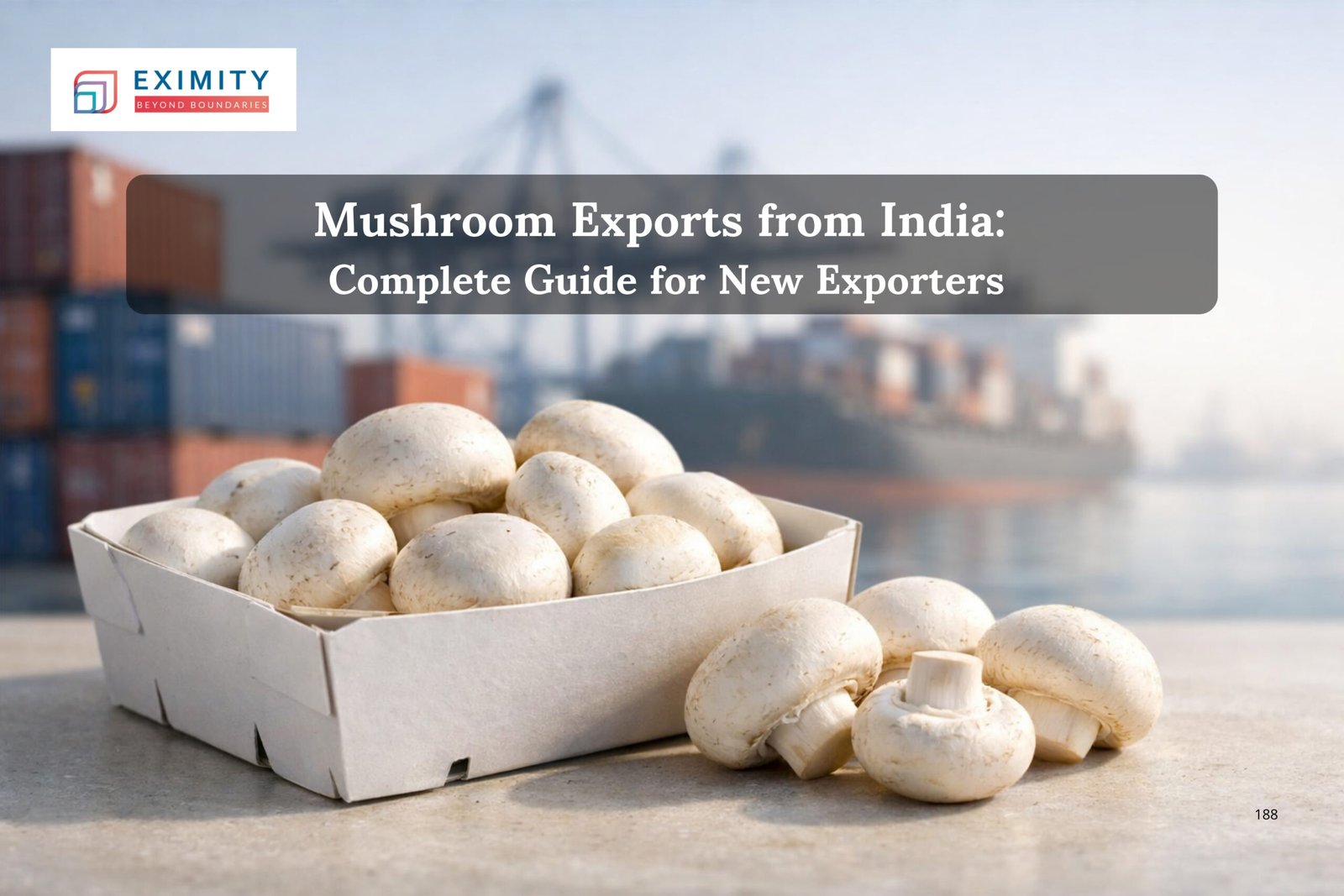
Mushroom exports from India are one of many new possibilities for new exporters from India due to the ever-growing sector of India’s agricultural export industry. Indian mushrooms are also gaining popularity due to the booming demand for healthy plant-based proteins. India exports button mushrooms, dried mushrooms, and other processed mushrooms and is expanding its export business.
Mushrooms are highly valued in the world for their nutrition and culinary versatility. There is a surge in demand for mushrooms due to the popularity of the vegan and functional food trends. Mushroom exports from India are set to grow, given the advances in India’s cold chain and global standards for the mushroom export industry.
With India’s reputation in agricultural trade, similar to the potato export from India, with an organized supply chain and quality control, systems are developing for the mushroom export business, ensuring smooth international trading and price control.
Overview of Mushroom Farming in India
Mushroom farming in India has a huge potential for exports because of the farming techniques being used. They cultivate not only button mushrooms but also other varieties like oyster mushrooms, milky mushrooms, and shiitake mushrooms. Major states for their production include Haryana, Punjab, Maharashtra, Tamil Nadu and Uttar Pradesh.
Thanks to controlled-environment farming and year-round farming techniques, consistency in supply has improved. With the growing organization of mushroom farming in India, exporters are able to provide stable volumes necessary for securing long-term international contracts. This consistent supply aids in growing mushroom exports from India and increasing dependability in international markets.
Types of Mushrooms Exported from India
The varieties of mushrooms that are exported include:
- Fresh button mushrooms
- Dried mushrooms
- Frozen mushrooms
- Oyster mushrooms
- Organic specialty mushrooms
Import demand for button mushrooms in exports is the highest. Because of the shelf life and ease of transport, processed and dried mushrooms are also in demand. Quality grading, moisture control, and hygienic packaging for exported mushrooms determine the international market standards.
Top Mushroom Importing Countries
One of the most important things to do to build an export strategy is to know the top mushroom importing countries. These countries include the United States of America, Germany, France, the United Kingdom, the United Arab Emirates, and some countries in Asia as well.
Given the expanding health awareness, food processing, and the rise of restaurants, top mushroom importing countries have a high demand for processed or unprocessed mushrooms. Exporters of up-to-date mushrooms need to have food safety certifications and appropriate refrigerated transport to satisfy the demands of the countries.
Mushroom Export Process from India
Mushroom export processes begin when an exporter is properly registered. The steps to begin a process include the following:
- Obtaining an Import Export Code (IEC)
- Registering with APEDA
- Meeting FSSAI standards
- Ensuring quality inspection and certification
- Arranging proper packaging and cold storage
In addition to the above, exporting processes require the appropriate Phytosanitary certificate and other documents that comply with the laws of the importing countries.
Role of Mushroom Exporters and Suppliers
Mushroom exporters in India connect the local farmers with the international markets. Exporting mushrooms streamlines sourcing, grading, packaging, compliance, and shipping to final customers. Mushroom exports from India rely on mushroom suppliers in India that can ensure consistent quality and that bulk quantities are available for each export contract.
Corn Export from India is an example of how structured supply chains positively impact competitiveness. Similarly, mushroom exporters in India are implementing modern warehousing and cold storage technologies to enable them to further establish their company in the international market.
Documentation Required for Export of Mushroom from India
Export of mushroom from india needs certain documents that the exporters need to work on, such as:
- Commercial Invoice
- Packing List
- Bill of Lading
- Phytosanitary Certificate
- Certificate of Origin
- APEDA Registration
Mushroom exporters in India need to work with mushroom suppliers in India that are experienced, as that will help them in maintaining the quality of the product. If the exporters are able to maintain their quality, then they will be able to have longevity in the partnership.
Business Opportunities in Mushroom Exports
The worldwide demand for plant-based food continues to grow. This trend is most likely to remain for the mushroom exports from India business. Heightened health awareness among the people, increasing urbanization, and a growth in the food processing industry are the major contributors.
The increased agricultural export of India, including dragon fruit export from India, demonstrates the international market’s demand for niche products, provided there is effective promotion and quality control. New entrepreneurs in the mushroom export business are likely to be beneficiaries of the government support schemes, export incentives, and the rapidly increasing digital trade.
Key Growth Drivers for New Exporters
- Rising global preference for plant-based and protein-rich foods
- Strong demand from food processing and hospitality industries
- Government support schemes and export incentives
- Expansion of digital B2B trade platforms
- Growing acceptance of Indian agricultural products worldwide
With proper planning and quality compliance, new exporters can leverage these factors to build a sustainable and profitable mushroom export venture.
Future Outlook
Mushroom exports from India are set for growth. With the adoption of new technologies, along with climate-controlled farming, supply reliability will improve, as will logistics. New opportunities for added value in mushroom products such as mushroom powder and other ready-to-cook items will increase profit margins.
Mushroom exporters will need to pay attention to global trade and food safety standards if they wish to succeed in the long term. Updates regarding regulations on mushrooms exports can be found with the Agricultural and Processed Food Products Export Development Authority (APEDA), along with other guidelines, to help exporters remain compliant in trade.
With the right amount of market research and solid planning, the opportunities are endless for new exporters looking to trade mushrooms internationally. Quality and research are the key components for success and to build a sustainable business.