
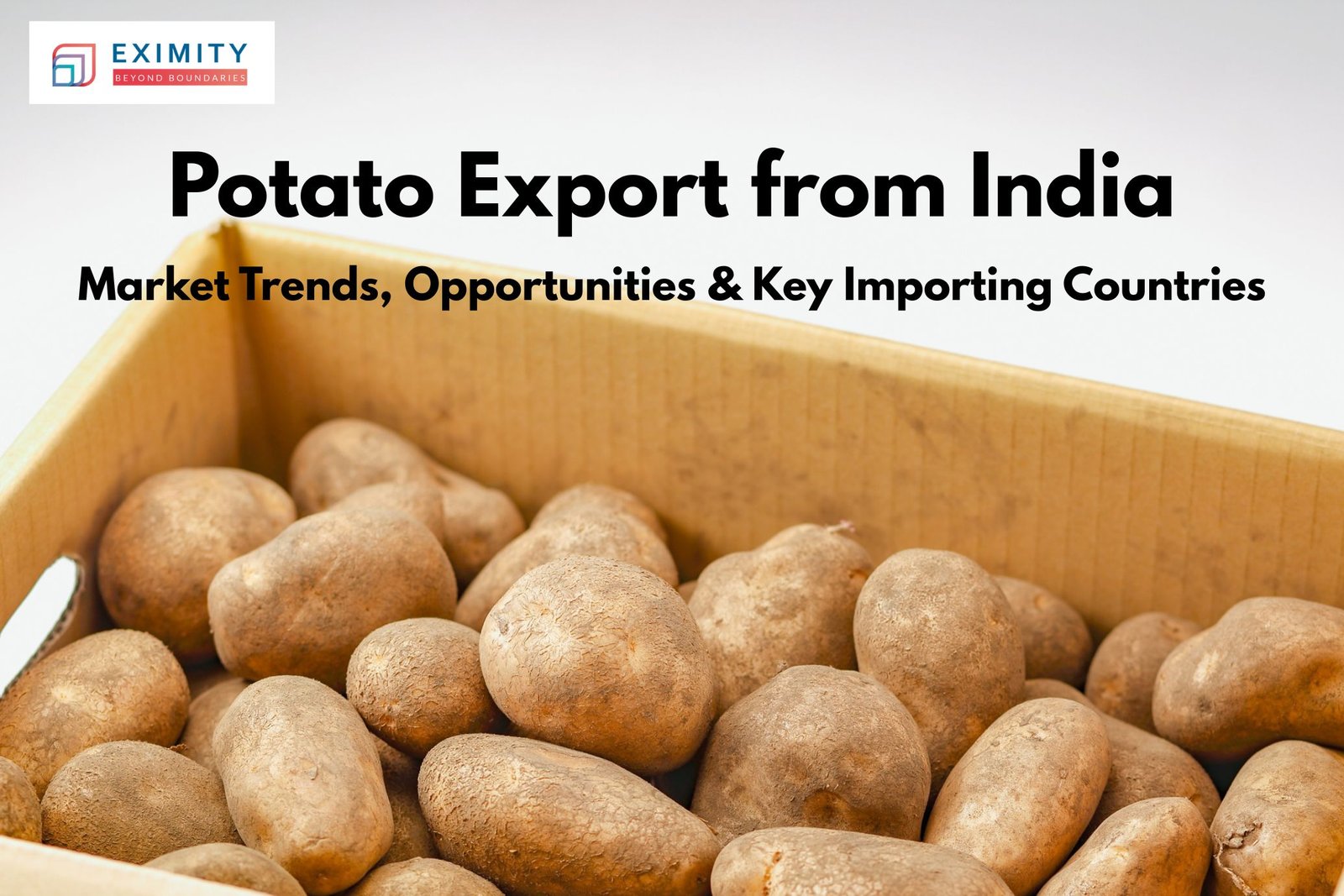
India is one of the largest agricultural producers in the world, and potatoes play a crucial role in its export economy. The potato export from India has seen steady growth, driven by high production capacity, global demand, and competitive pricing. For entrepreneurs, this sector presents significant opportunities to expand into international markets. In this blog, we’ll explore production insights, export trends, importing countries, opportunities in processed food exports, challenges, and the future of Indian potatoes.
Overview of Potato Production in India
India’s Position in the Global Potato Market
With production soaring, India ranks a solid second behind China in global potato output. The northern and western states especially Uttar Pradesh, Bihar, Gujarat, West Bengal, and Punjab, lead the harvests.
- The Indian harvest comes in at over 50 million metric tons every year.
- Farmers plant potatoes in both the winter (rabi) and monsoon (kharif) seasons.
- The country grows table potatoes, processing grades, and export-quality varieties.
Drivers of Growth in Production
Several factors ensure the stability of potato production in India:
- Fertile soil and diverse climatic zones.
- Increasing adoption of modern farming practices.
- Government schemes for irrigation, cold storage, and transport.
With India’s production capability, the nation is in a strong position to drive sustainable potato-export growth for years.
Growth of Potato Export from India
The steady expansion of potato exports from India reflects the country’s strong presence in the agri-export market. Indian potatoes are in high demand for both fresh consumption and processed products.
By leveraging professional import-export services and modern trade practices, entrepreneurs can overcome challenges and maximize opportunities in the global potato market.
India Potato Export Performance
- The value of India’s potato export has been consistently increasing in Asia and the Middle East.
- Buyers appreciate the balance of quality and cost-effectiveness.
- Exporters benefit from shorter shipping times to nearby regions like Nepal and Bangladesh.
The export of potatoes from India has also diversified into new regions, showing the adaptability of exporters.
Key Markets for Indian Potatoes
India’s potatoes go to a wide range of countries, but the main markets are
- Nepal
- Bangladesh
- UAE
- Indonesia
- Malaysia
- Sri Lanka
These nations value India’s crops for their price and guaranteed quality.
Reasons for the Preference
Importers choose Indian stock for several reasons:
- India’s fields produce large quantities, so supply is steady.
- Growers produce several potato types that fit local menus.
- Trustworthy networks of dealers and shippers make sure your delivery is timely and safe.
These factors create ongoing confidence and drive potato exports from India.
Opportunities for potato chips export from India
As global consumers snack more often, the demand for convenient, tasty chips is surging. Entrepreneurs in India are now seeing potato chips export from India as an attractive way to ride this trend.
Rising demand for processed food
Packaged chips and frozen potato products are fast becoming some of the world’s favorite snacks. Chips offer several advantages for Indian producers:
- They yield higher profitability than selling fresh potatoes.
- Indian potatoes are well-suited, allowing for excellent quality and taste.
- North America and Europe have premium price points that Indian producers can now tap.
How Exporters Can Profit
Chips and processed products carry several clear advantages:
- Chips can stay fresh for up to nine months, so warehouses don’t sit empty.
- Adding a brand story builds loyalty, making every bag more valuable.
- Retail giants overseas want Indian-made snacks, opening fast, reliable sales channels.
- Entrepreneurs who tap chips can easily move into other value-added potato products later.
Challenges in the Potato Export Business
Challenges are real, but they can be managed:
- Many rural packhouses still lack the right cold storage.
- Prices for potatoes can swing wildly by season.
- Export quality standards and phytosanitary checks can sometimes lead to delays in shipments and additional costs.
- Rising logistics and freight prices are putting pressure on margins.
By enhancing cold-chain logistics, upgrading storage facilities, and implementing stricter quality controls, India can tap into the potato chip export potential and increase volumes even more.
Starting a Potato Export Business from India
Starting a potato export from India requires proper planning and compliance. The first step is to register your company and obtain an Import Export Code (IEC), which is mandatory for international trade. Exporters should also get APEDA registration and prepare essential paperwork such as a phytosanitary certificate, certificate of origin, and commercial invoice.
Essential Steps for Exporters
- Company registration and IEC application.
- Research profitable markets for Indian potatoes.
- Connect with trusted farmers and plan with cold storage partners.
- Make sure your packaging complies with export standards.
For a deeper dive, visit How to Start an Export Business in India.
Documentation Needed
Accurate documents keep shipments on schedule. Gather the certificate of origin, phytosanitary certificates, bill of lading, and customs clearance papers. Full details are available in Documents for Export.
Future of Potato Export from India
Expanding Market Potential
The outlook for potato export from India is optimistic, with higher demand emerging from markets in Asia, Africa, and Europe.
Technology and Value Addition
Leverage cold chain tech for longer storage; look into exporting dehydrated potato chips and frozen products; and use upgraded packaging to keep in line with global norms.
Exporters can uncover fresh avenues via the Products for Import and Export Business initiative.
Conclusion
The potato export from India has grown steadily, supported by large-scale potato production in India, expanding markets, and rising opportunities in potato chips export from India. Importers continue to rely on Indian potatoes for affordability and quality. With proper documentation, planning, and market research, exporters can build profitable ventures.
By addressing current challenges and investing in innovation, the export of potatoes from India will continue to thrive, offering entrepreneurs long-term opportunities in global trade.